
News
LHU assigned two key AI projects, pioneering a digital transformation ecosystem in Dong Nai
As digital transformation enters an accelerated phase, the ability of higher education institutions to directly address technological challenges in the public sector has become a practical measure of their capacity. At the Science and Technology Conference for the 2026–2030 period, held on March 31, 2026, LHU was entrusted with two key projects related to artificial intelligence (AI). This reflects that LHU has moved beyond its traditional educational role, demonstrating its capability to design and implement core technological solutions within the system.
Representing LHU at the conference were Dr. Nguyen Van Tan, Vice Rector of LHU, along with leaders and faculty members from the Center of Scientific Research and Applications, the Faculty of Information Technology, and the Faculty of Pharmacy. The event also gathered scientists, representatives from research institutes, universities, and research centers both within and outside Dong Nai province, as well as leaders from provincial departments, agencies, and local authorities.
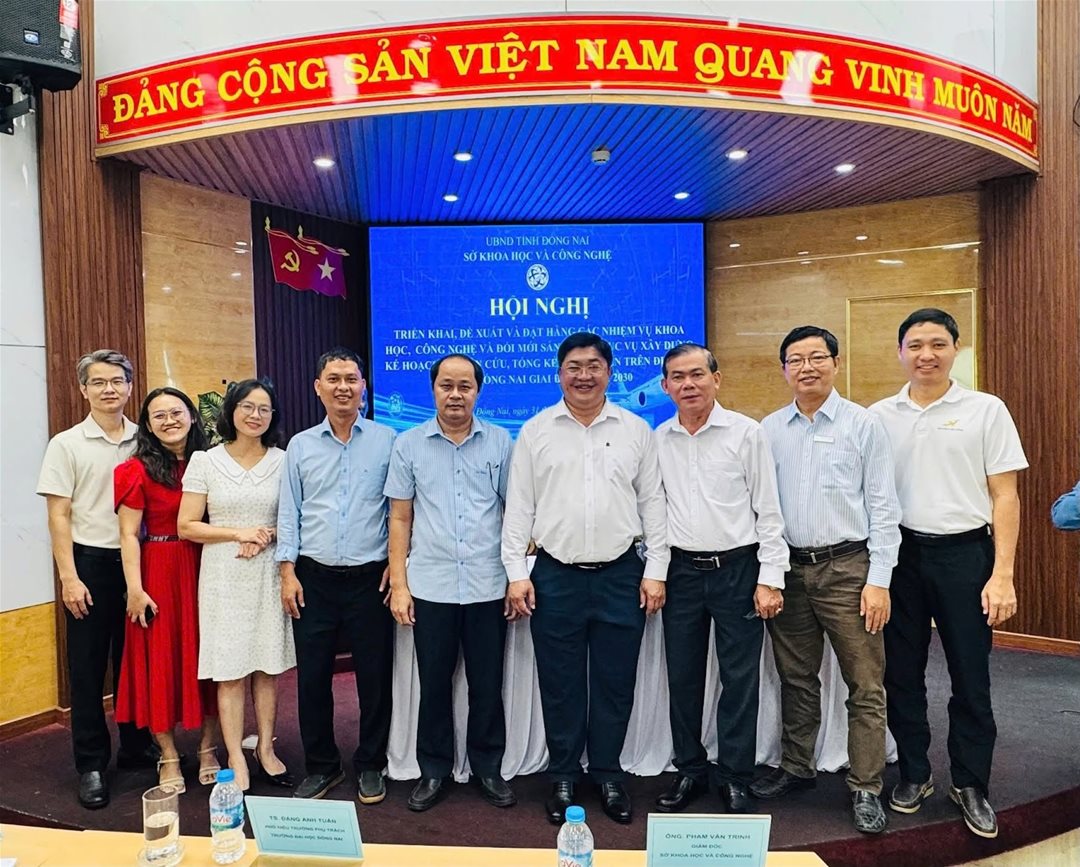
LHU delegates attending the conference
At the conference, LHU was was assigned two of the 182 proposed science and technology projects, including a robot supporting public administrative services and a virtual assistant for government officials. These tasks are considered key solutions aimed at addressing operational bottlenecks in the administrative system.
The robot for public services aims to reshape the citizen experience when accessing administrative procedures, from initial guidance to information processing. Meanwhile, the virtual assistant for government officials focuses on automating processes, standardizing data, and supporting decision-making. These two approaches reflect a clear technological mindset: AI must be integrated into real-world operations, solving specific problems and generating measurable value.
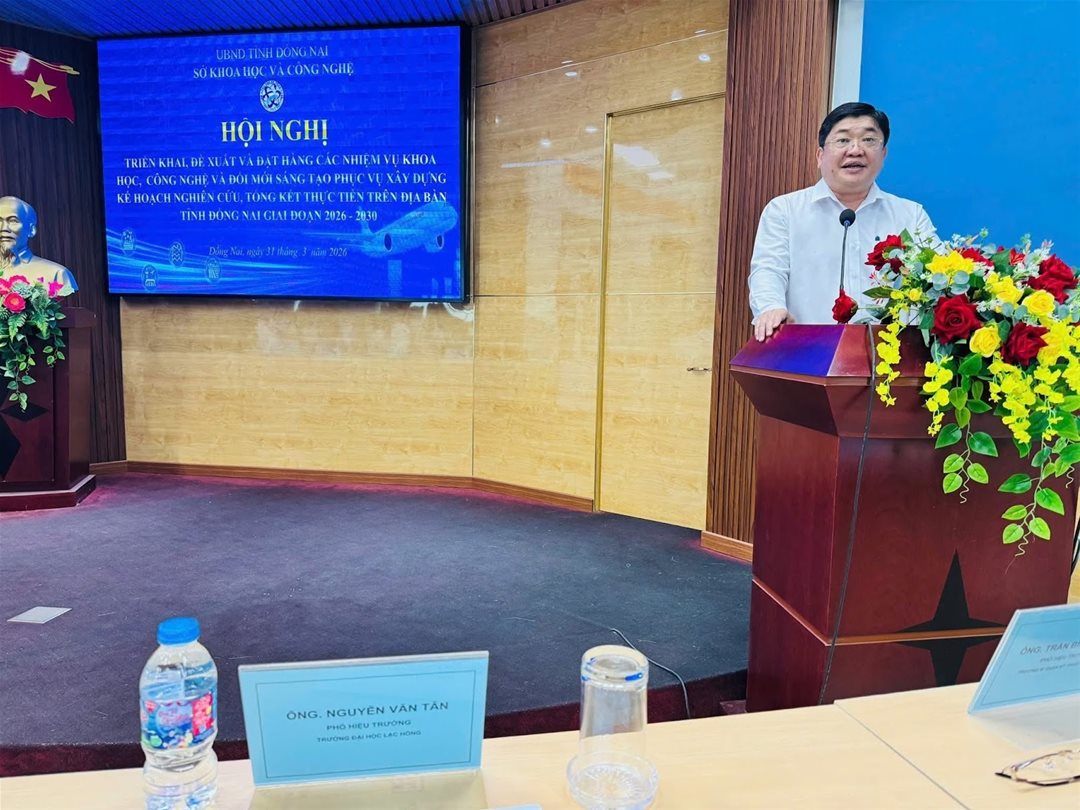
Pham Van Trinh, Member of the Provincial Party Committee and Director of the Department of Science and Technology, chairing the conference
LHU’s responsibility for these projects highlights its transition from a traditional educational role to a role in developing technological solutions. The University is now directly participating in the innovation value chain, where research is developed, tested, and applied in real-world environments.
LHU also proactively proposed four new projects in the fields of AI, energy, healthcare and pharmaceuticals, and agriculture, highlighting its research orientation toward sectors that directly contribute to socio-economic development. Expanding research topics in an interdisciplinary direction demonstrates the University’s capacity to conduct research on a systemic scale rather than through isolated projects.
These outcomes further reflect the effectiveness of the “triple helix” collaboration model (government - university -industry) in Dong Nai province. Within this framework, LHU serves as a knowledge hub, implementing technology transfer, narrowing the gap between research and real-world application, and strengthening the province’s competitiveness in a new phase of development.
LHU # AI projects # digital transformation # research # application
